
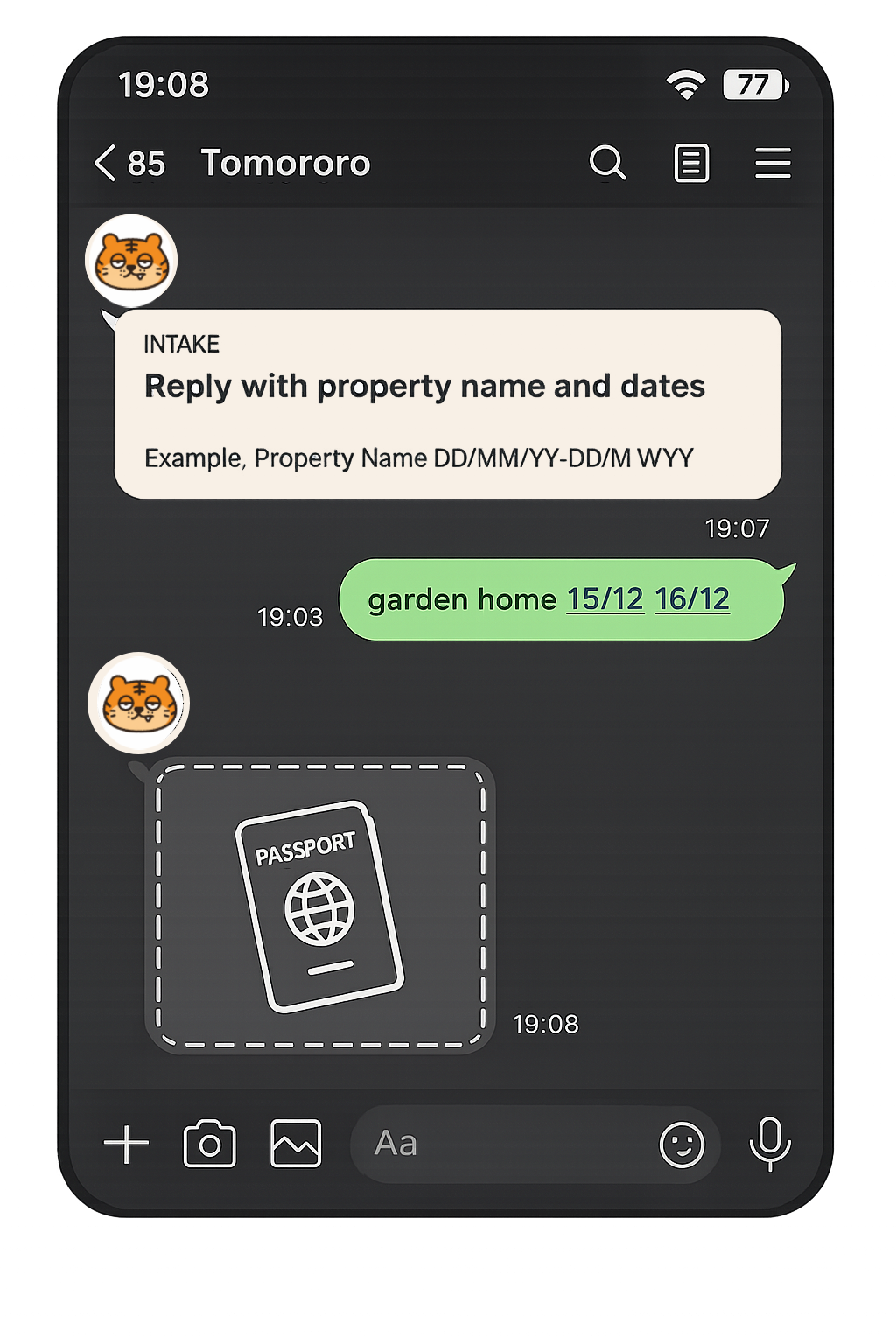
Yes, a passport-photo request can be normal in Thailand. Accommodation providers often need passport details for check-in records and TM30-related reporting. You should still check who is asking, why they need it, and where you are sending it.
Why this happens in Thailand
Thailand has a residence notification process commonly called TM30. When a foreign national stays at a hotel, guesthouse, rented condo, villa, apartment, or similar accommodation, the accommodation side may need to notify immigration that the guest is staying there.
Official Thai government guidance says the host, house owner, possessor, or hotel accepting a foreigner must notify the local immigration office within 24 hours from the time the foreigner stays there. If there is no nearby immigration office, notification may be made to the local police station.
That is why a legitimate hotel or host may ask for passport details before arrival or during check-in. They are usually trying to collect the information needed for their guest records and residence notification workflow.
What TM30 means for you as a guest
For most short-stay guests, TM30 is not a form you personally file at the front desk. The accommodation provider is usually the party preparing or submitting the notification. You are asked to provide details because the property needs accurate information about who is staying there.
The details commonly needed include:
- Your full name as shown in your passport
- Your nationality
- Your passport number
- Your check-in and check-out dates
- Sometimes visa or arrival details, depending on the property's process
If the spelling or passport number is wrong, the property may need to correct it later. That is one reason many teams prefer to look at the passport image instead of asking you to type everything manually.
Why they ask for a photo instead of typed text
Passport data is easy to mistype. Names may be long, unfamiliar to the staff, or formatted differently from one country to another. Passport numbers can contain similar-looking characters. A photo gives the accommodation team a source document they can check against.
Some properties still take a photocopy at reception. Others ask for a photo in advance, especially if they use remote check-in, self check-in, or a pre-arrival workflow. A well-run process should make the reason clear and avoid leaving raw passport images scattered across personal phones or group chats.
A passport photo contains sensitive information. It should be requested for a clear purpose, sent through a channel connected to your booking, and kept only as long as reasonably needed.
What is normal, and what is not
Usually normal
- The front desk asks to see or scan your passport when you arrive.
- The hotel sends a pre-check-in link from an official email, verified LINE account, or booking-platform message.
- A villa or property manager asks for guest details before arrival and explains that it is for check-in or TM30.
- The request matches the property name, dates, and booking you already know.
Worth questioning
- A random personal account asks for your passport without proving they are connected to the booking.
- The property refuses to explain why it needs the passport image.
- The request includes unrelated sensitive information, such as card details, passwords, or one-time codes.
- The property name, account name, or booking details do not match.
How to share your passport photo more safely
- Confirm the request came from your real hotel, host, or property manager.
- Use the official booking platform, hotel email, verified LINE account, or secure upload link when available.
- Ask if the image is for check-in and TM30 if the reason is unclear.
- Avoid sending passport photos into broad group chats or unrelated personal accounts.
- If you add a watermark, keep the name, passport number, and machine-readable lines readable, or the property may need to ask again.
If you feel unsure, ask the property to confirm the request inside your booking platform conversation. That creates a clearer record and reduces the chance that you are dealing with the wrong person.
What if you do not want to send it before arrival?
You can ask whether you may show the passport at check-in instead. Many hotels can collect the information in person. Remote stays, private villas, and self check-in properties may still need the details before you arrive, but a legitimate host should be able to explain the process.
If you are staying long term or dealing with visa extensions, address records can matter more. In that case, ask the accommodation provider what proof or receipt they can provide after they complete their process.
If your host uses tomororo
tomororo is a document workflow for accommodation teams. It helps hotels, hosts, and property managers collect passport photos, read guest details, review extracted fields, and prepare TM30-ready exports. It is not a government website, not Thai immigration, and not a substitute for the property's responsibility to check and use information correctly.
When passport photos are sent through tomororo workflows, tomororo generally strives to remove raw passport photos and document files from active systems within 48-72 hours, even if parsing fails. Structured guest records, such as names, passport numbers, stay dates, and review history, follow the workspace retention policy controlled by the accommodation customer.
For more detail, read tomororo's Trust & Data Safety, Privacy Policy, and PDPA Notice.
Official places to check
TM30 rules can be applied differently by local offices and may change over time. For official information, check Thai government and immigration channels or ask the relevant local immigration office.
- Thailand.go.th: rules for establishments on notification of foreigners' residence
- Immigration TM30 online system
FAQ
Is it legal for a hotel in Thailand to ask for my passport?
Hotels and accommodation providers commonly need passport details for check-in and residence notification processes. The better question is whether the request is coming from the real property, for a clear purpose, and through a reasonable channel.
Do I personally file TM30?
For normal hotel or short-stay accommodation, the property side usually handles the notification. You provide the passport and stay details they need for their process.
Can I cover part of my passport photo?
If you cover important fields, the property may not be able to use it. If you watermark it, keep key details readable and use wording such as "For check-in at [property name]" rather than covering the document.
Is tomororo Thai immigration?
No. tomororo is a private workflow tool for accommodation teams. It helps prepare guest data and TM30-ready exports, but the accommodation provider remains responsible for how they use and submit information.